 Français (France)
  Finnish (FI)
  English (United Kingdom)


 |
Follow the Discoverit.fi LinkedIn company page and get special benefits. |
| Subscribe to 'A Hitchhiker's Blog of PM' newsletter | |
Select your language
Select your language

|
Follow the Discoverit.fi LinkedIn company page and get special benefits. |
| Subscribe to 'A Hitchhiker's Blog of PM' newsletter | |
Small and medium-sized projects often face a familiar pitfall: things start to go wrong, but the threshold for seeking help is high. The project and its problems seem too minor to warrant “proper” consulting, yet too important to be left as such. All this results in even bigger problems.
In my previous article, I described why many non-profit projects run into difficulties despite enthusiasm and good intentions.
Read more: How do lightweight project models support non-profit projects?
Projects in the non-profit sector, often heavily volunteer-based, suffer from somewhat different problems than corporate projects. Let's dive into these problems and their root causes.
Read more: Why do projects in the non-profit sector run into difficulties?
Have you ever, say while driving, been so mesmerized by traffic lights that you’ve forgotten where you’re going? Maybe not, but what about projects?
As soon as a problem is identified in an organization, the familiar pattern begins: a project is created, a steering group is named, and a Teams channel is opened (figure 1). Soon, people are already making a plan – without stopping to ask: what is the real problem, and what would be the most reasonable way to solve it?
According to research (including Saara Karasvirta), large organizations can have hundreds of change projects running simultaneously – often without a clear overview, prioritization, or targeted resourcing.
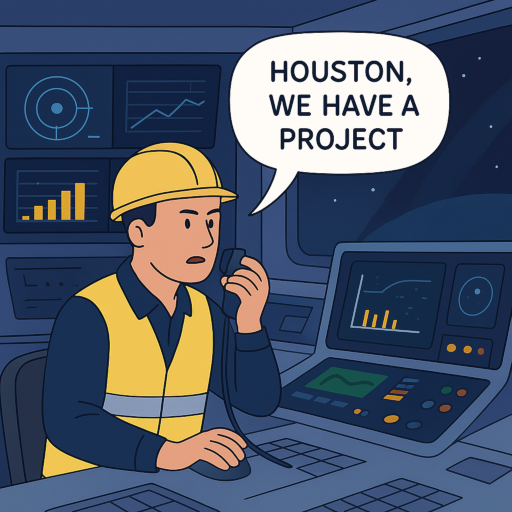
Figure 1. "Houston, we have a project."