 Français (France)
  Finnish (FI)
  English (United Kingdom)




Have you ever, say while driving, been so mesmerized by traffic lights that you’ve forgotten where you’re going? Maybe not, but what about projects?
“Status shows green.”
How many times have you heard that—and yet sensed that something wasn’t quite right?
The schedule looks good. The budget is under control. Reporting is working. Yet some alarm bells are ringing.
An uncomfortable thought creeping into the back of your mind might tell you that project failure can actually stem from a misunderstanding.
Easily Overlooked Things
Project management often relies on status reports that describe how things look—not why they are that way or what will happen next.
If you want to get a solid understanding of your project, you need three different perspectives:
- What is actually happening?
- Why does this lead to a certain outcome?
- What are the consequences?
Most people address only the first one — and even then, incompletely.
1. Status Check: Reveal the Uncomfortable Truth

A proper diagnosis of a project often reveals the following problems:
- decision-making is slow
- priorities are constantly shifting
- identified risks are not mitigated
- responsibilities and authorities are not aligned
In other words: the problem isn’t what the reports show—it’s what they don’t show.
Diagnoses don’t solve problems, of course, but they shatter the illusion of control.
2. Understanding: Not everything Is Important
Once you know where you’re heading, the next question is: what next?
A project’s success isn’t guaranteed by a generic list of success factors. Success requires active guidance (Success Vector) following a realistic assessment of the situation, in which:
- some factors are critical,
- others are nearly insignificant, and
- some have a direct and others an indirect impact
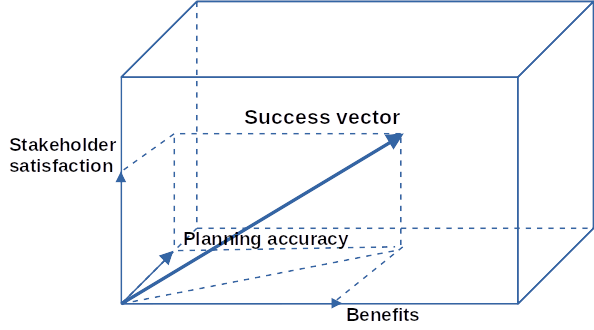
Without this understanding, you’ll end up doing the wrong things—which happens more often than you’d like to believe.
3. Looking Ahead
This is where many projects come to a standstill. The situation has been assessed, and our understanding has improved.
Yet no one asks: what will happen in the future?
Without modeling (simulation), the project’s future remains a matter of guesswork amid uncertainty.

Corporate Facelifting: A “Pretty Good” Project
Let’s imagine a fairly typical project: a redesign of a company’s or organization’s corporate identity and website, where
- the schedule is a bit tight but the team believes it’s feasible,
- the budget is under control, and
- the status is green.
A closer look, however, reveals that:
- decisions take 5 days on average,
- tasks are started before the previous ones are finished, and
- identified risks are not prioritized.
The delay in decision-making, in turn, stems from insufficient decision-making authority—that is, misaligned responsibilities. As a result, the operational level is constantly waiting for decisions from upper level before moving forward.
At the start of the project, this has not yet caused problems, which is why reports indicate planned progress.
However, as the project moves to more detailed planning and implementation, delays in decision-making begin to slow down actions more and more. When using a simulation tool such as MonteCarloProject, we can e.g. find out that there is a 65% probability of delay and a 40% probability of budget overrun.
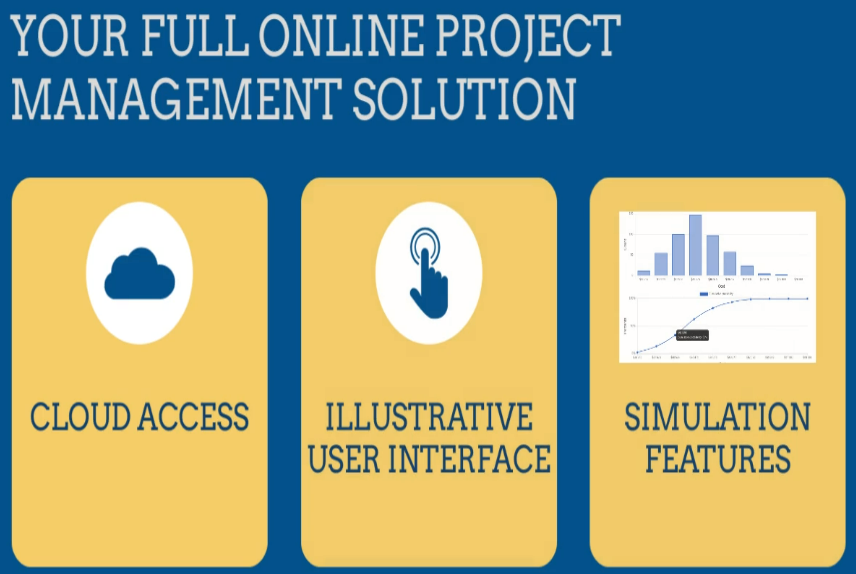
In other words, the day-to-day friction caused by unclear responsibilities poses a significant risk to success.
When the decision-making delay is reduced by two days, the simulation shows that the risk of delay drops to less than 30% and the probability of going over budget is halved.
The project has changed from “pretty good” to manageable.
What Changed?
A mindset instead of tools:
- situational awareness → no more assumptions
- understanding → no more guesswork about influencing factors
- anticipation → from wishful thinking to more accurate modeling
An Uncomfortable Question
When your project looks “green,” ask yourself: is it really under control—or has the reporting misled you?
Without combining situational awareness, understanding, and foresight, this can happen.