 Français (France)
  Finnish (FI)
  English (United Kingdom)


 |
Follow the Discoverit.fi LinkedIn company page and get special benefits. |
| Subscribe to 'A Hitchhiker's Blog of PM' newsletter | |
Select your language
Select your language

|
Follow the Discoverit.fi LinkedIn company page and get special benefits. |
| Subscribe to 'A Hitchhiker's Blog of PM' newsletter | |
Uncertainty is a key characteristic of projects. Yet most project management tools present schedules and budgets as precise numbers — as if we knew what the future holds for us. Monte Carlo simulation - backed by AI analysis like in the MonteCarloProject tool - shows the overall situation, possible consequences, and corrective actions.
Small and medium-sized projects often face a familiar pitfall: things start to go wrong, but the threshold for seeking help is high. The project and its problems seem too minor to warrant “proper” consulting, yet too important to be left as such. All this results in even bigger problems.
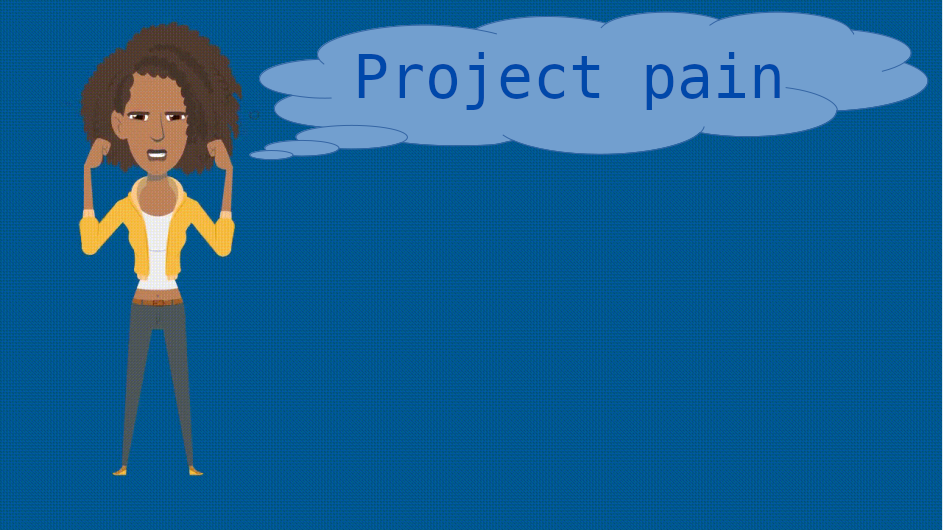
Figure 1. Project pain.
Having been a project management trainer during this millennium, more or less, I have wondered why project training rarely produces results. There are certainly no conclusive research results on the subject, so I am careful with phrasing. Training does not automatically translate into lessons, let alone better performance. I have divided the obstacles into three categories.
PM² is the project management methodology developed by the European Commission. It is open, free to use, and built on proven best practices — designed for the realities of EU-funded and public-sector projects. Finland now has its first PM² Alliance Regional Coordinator, and DiscoverIT is your local training and consulting partner.
Read more: PM² is now in Finland — and you might benefit from it
If project governance focuses too heavily either on strategic issues such as business benefits or either on operational effectiveness balance might be lost.
Traditional governance models tend to:
As a result:
Project Success Vector (figure 1) provides a simple, yet a powerful way of evaluating and measuring project success. It is composed of three core components (dimensions): stakeholder satisfaction, achievement of benefits, and planning accuracy.