 Français (France)
  Finnish (FI)
  English (United Kingdom)


First pillar of the PM² house is the governance model.
Select your language

 |
Follow the Discoverit.fi LinkedIn company page and get special benefits. |
| Subscribe to 'A Hitchhiker's Blog of PM' newsletter | |

Most organisations recognise the value of project management methodology: clear responsibilities and decision-making, traceable processes and the ability to learn from experience. Yet adoption often stalls - barely surviving thanks to the effort of a few committed individuals while the rest of the organisation retains its old habits. This can be seen as the methodology paradox: the benefits are understood, but everyday behaviour does not change.
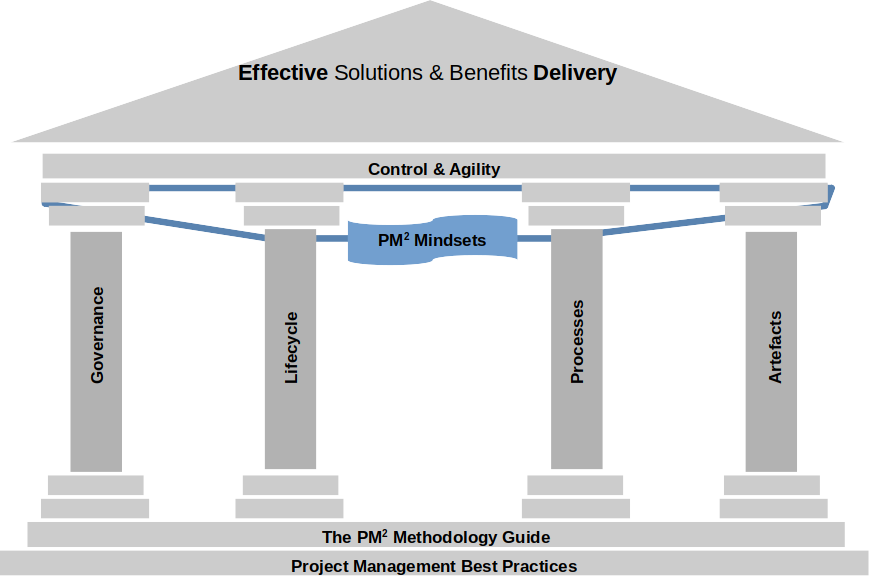
A consistent system: overview of the pillars of the PM²
Over the past months we've walked through PM²'s pillars one at a time: the governance model, the project lifecycle, the processes, the artefacts, and finally the necessary glue holding the house together: the mindsets. Each has its own purpose. But in a project, e.g. an EU-funded one, their real value emerges when they work together — and this is a good moment to tie the threads together before PM² Finland's first community meetup on 25 August 2026.
Finland is currently implementing a significant EU-funded development initiative. The Innovation and Skills in Finland 2021–2027 programme has a public funding of over €3.1 billion – and every euro used needs to meet expectations related to results, transparency, and controlled delivery. This is where project management really matters.
Read more: How does the PM² methodology help EU-funded projects?
First pillar of the PM² house is the governance model.
Every project has a certain lifecycle. PM² doesn't leave that to chance: it structures the project's timeline into four clear, sequential phases — the second pillar of the methodology, the Lifecycle.